


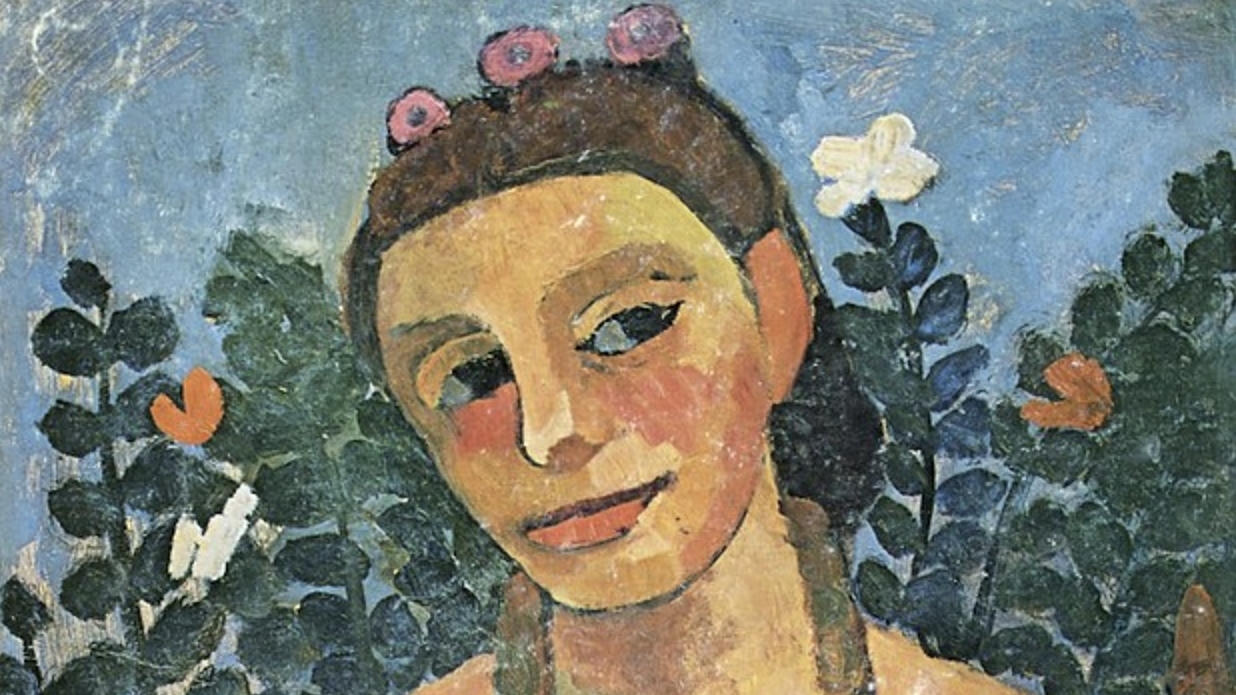
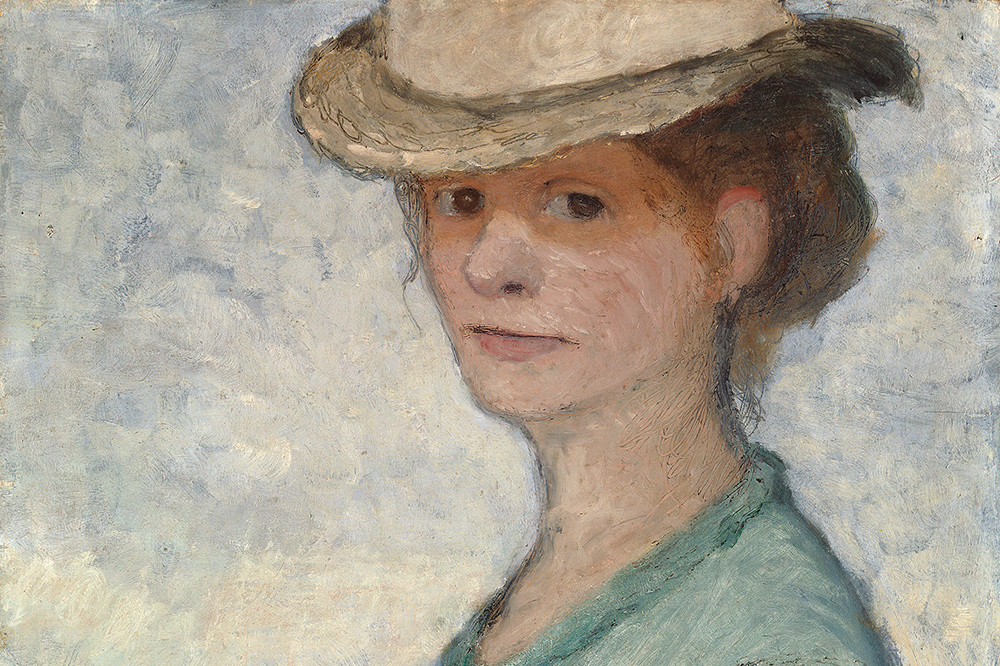
In a landmark moment for early modernist art, a small self-portrait by German Expressionist painter Paula Modersohn-Becker, once confiscated by the Nazis as "degenerate" art, has fetched a staggering €1.3 million ($1.5 million) at auction, more than doubling her previous record. The sale, which took place at Berlin's Grisebach auction house in late November 2025, underscores the growing recognition of Modersohn-Becker's pioneering contributions to modernism and feminism in art. Titled Selbstbildnis nach halblinks (Self-Portrait Looking Slightly Left), the 1906 oil-on-canvas work measures just 10½ inches high but packs profound historical and artistic weight. This event not only highlights the artist's innovative self-representation but also revives discussions on the Nazi regime's suppression of avant-garde art and the resilience of cultural heritage.
Paula Modersohn-Becker, born Minna Hermine Paula Becker on February 8, 1876, in Dresden, Germany, emerged as a trailblazer in the male-dominated art world of the early 20th century. Raised in a middle-class family that encouraged her education, she pursued artistic training against societal norms that often confined women to domestic roles. After initial studies in Bremen and London, she moved to Berlin in 1896 to attend the School of Drawing and Painting for Women, where she honed her skills in realism and naturalism. By 1898, she joined the artists' colony in Worpswede, a rural village near Bremen, where she met her future husband, landscape painter Otto Modersohn, whom she married in 1901. This period marked her shift toward more expressive forms, influenced by the colony's emphasis on nature and peasant life.
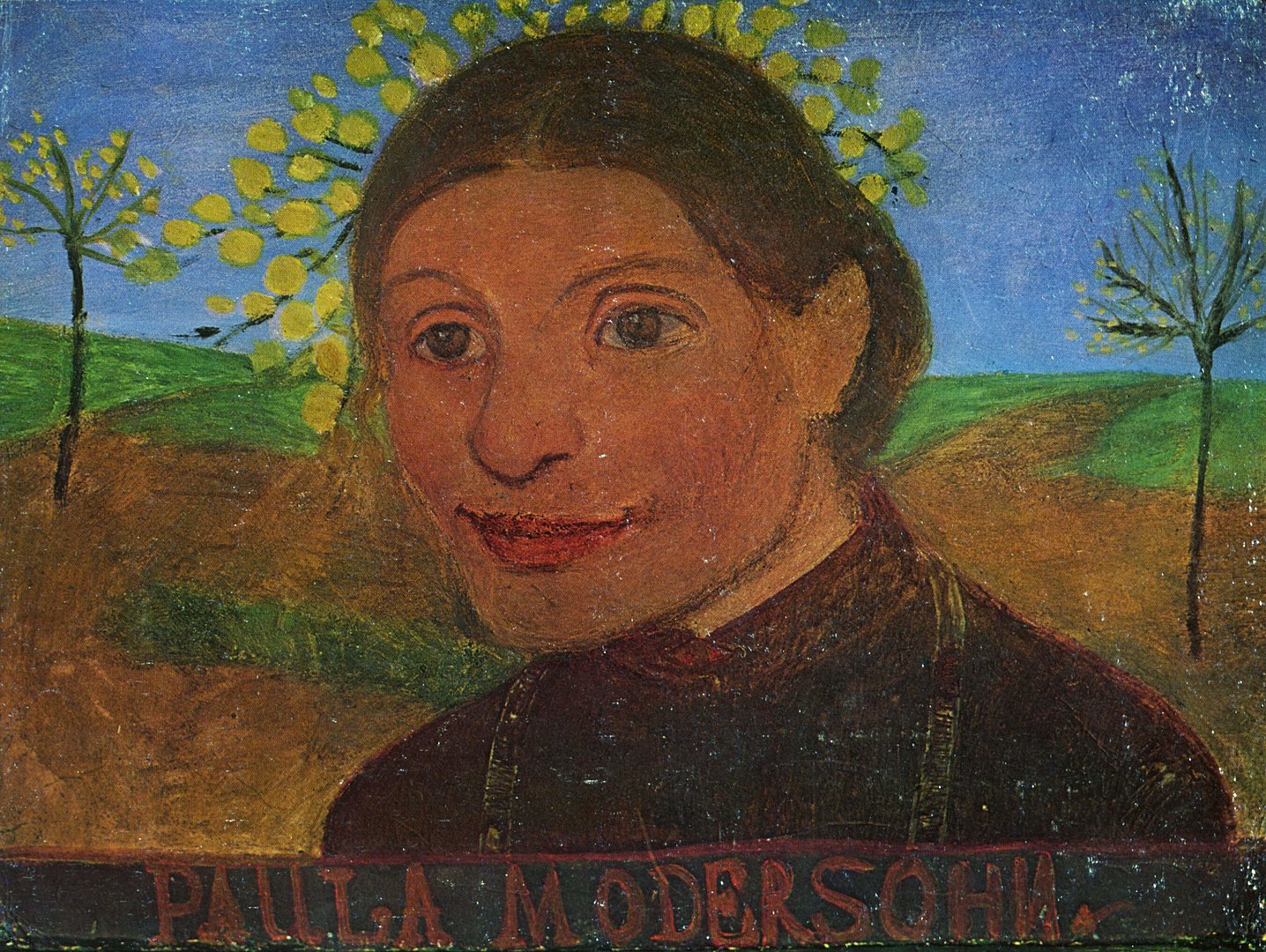
Modersohn-Becker's repeated trips to Paris between 1900 and 1907 were transformative. At the Académie Colarossi and the Académie Julian, she immersed herself in the city's vibrant art scene, drawing inspiration from Post-Impressionists like Paul Cézanne, Vincent van Gogh, and Paul Gauguin. She also encountered the works of Les Nabis and Fauvism, adopting bold colors, simplified forms, and innovative techniques such as scratching into wet paint to create texture. Her oeuvre, comprising over 700 paintings and 1,000 drawings in a mere 14-year career, focused predominantly on portraits of women and girls, still lifes, and landscapes. Themes of motherhood, femininity, and introspection permeated her work, often rendered with a raw, unidealized honesty that challenged conventions.
A feminist icon avant la lettre, Modersohn-Becker is celebrated as the first known woman to paint nude self-portraits, including those depicting pregnancy—a radical act in an era when female nudity was typically objectified by male artists. Works like Self-Portrait on the 6th Wedding Anniversary (1906), where she portrays herself semi-nude and pregnant (though she wasn't at the time), symbolize her assertion of bodily autonomy and creative independence. Tragically, her life was cut short; she died on November 20, 1907, at age 31, from complications following the birth of her daughter, Mathilde. Despite her brief career, her legacy endures, with the Paula Modersohn-Becker Museum in Bremen—opened in 1927 as the world's first museum dedicated to a female artist—housing the largest collection of her works.
The auctioned self-portrait exemplifies Modersohn-Becker's introspective style. Painted in 1906 during one of her Paris sojourns, it features the artist gazing slightly leftward, her face framed tightly against a neutral background. The brushwork is loose and expressive, with earthy tones and subtle modeling that convey quiet determination. This piece was part of the collection at the St. Annen Museum in Lübeck until 1937, when the Nazi regime seized it under their campaign against "degenerate art"—a term used to vilify modern art deemed un-German, Jewish-influenced, or subversive. Over 20,000 works by artists like Max Beckmann, Ernst Ludwig Kirchner, and Käthe Kollwitz were confiscated from public museums, with many sold abroad or destroyed to fund the war effort.
The portrait's provenance adds layers of intrigue. It entered the collection of collector and patron Walter Bauer (1901–1968), who acquired persecuted artworks through officially appointed dealers. Bauer, a dissident imprisoned from 1944 to 1945 for anti-Nazi activities, aimed to protect and rehabilitate these pieces. Postwar, the self-portrait featured in prestigious exhibitions, including at Munich's Haus der Kunst, the Lenbachhaus, the Museum of Modern Art in Hayama, Japan, and the Museum Ludwig in Cologne. Its journey from condemnation to celebration mirrors the broader reevaluation of modernist art in the postwar era.

The Grisebach auction on November 28, 2025, saw fierce bidding for this diminutive yet powerful work. Estimated at €400,000 to €600,000, it hammered at €1.27 million, reaching €1.3 million with fees—surpassing the artist's previous auction high of €525,000 (about $714,000) set in 2013 for Auf einem Stuhl sitzendes Mädchen mit Kind auf dem Schoss vor Landschaft (A Girl Sitting on a Chair with a Child on Her Lap, In Front of a Landscape), also at Grisebach. The buyer remained anonymous, but the sale reflects surging interest in Modersohn-Becker amid a broader market boom for female artists historically undervalued. As the auction house stated, “This record hammer price is a powerful testament to the emphatic recognition of Paula Modersohn-Becker’s work.”
This achievement aligns with recent institutional acclaim. In 2022, the Schirn Kunsthalle in Frankfurt hosted a major retrospective, while in 2017, the Museum of Modern Art (MoMA) and the Neue Galerie in New York jointly acquired her 1907 self-portrait—the first by the artist in a U.S. museum collection. Art historian Diane Radycki, in her biography, positions Modersohn-Becker as "the first modernist woman painter," emphasizing her role in bridging Impressionism and Expressionism. Her works, once derided, now command premium prices, with private sales occasionally exceeding auction figures.
The Nazi "degenerate art" campaign, formalized in 1937 with the infamous Munich exhibition mocking over 650 confiscated works, aimed to purge modernism from German culture. Modersohn-Becker's inclusion stemmed from her bold, non-traditional depictions of the female form, which clashed with Aryan ideals of beauty. Ironically, this persecution enhanced her posthumous stature, as survivors and scholars reclaimed her narrative. Today, exhibitions like those at the Kunstmuseum Basel, which holds pieces from the 1939 Lucerne auction of degenerate art, continue to explore this dark chapter.
Modersohn-Becker's influence extends beyond auctions. Her emphasis on the female gaze prefigured later feminists like Frida Kahlo and Cindy Sherman. In Worpswede, where she painted rural women with empathy rather than romanticism, she subverted the colony's male-centric views. Pieces like Reclining Mother and Child Nude (1906) celebrate maternal bonds with unflinching realism, drawing from ancient fertility sculptures and modern anatomy studies. Her diaries reveal a woman wrestling with artistic ambition and domesticity: "I am becoming somebody—I'm quite sure of that."
The record sale prompts reflection on the art market's evolution. Female artists, long marginalized, are seeing unprecedented valuations—witness Joan Mitchell's $29.5 million record or Georgia O'Keeffe's consistent highs. For Modersohn-Becker, this milestone affirms her as a modernist pioneer, her self-portraits serving as defiant assertions of identity. As collectors and institutions vie for her limited output, prices are likely to climb further, especially with ongoing scholarship and exhibitions.
In Berlin, Grisebach's role in this narrative is fitting; founded in 1986, the house specializes in 19th- and 20th-century art, often featuring German Expressionists. The auction's success, amid a softening market, signals robust demand for historically significant works. For Modersohn-Becker enthusiasts, the Paula Modersohn-Becker Museum offers immersive experiences, including her studio reconstructions and archival materials.
This sale not only doubles her record but also cements her place in art history. From Worpswede's marshes to Paris's ateliers, Modersohn-Becker forged a path of innovation, her gaze—slightly leftward or straight ahead—challenging viewers to see the world anew.
As the art world digests this achievement, it invites broader questions: How do we value art tainted by historical trauma? And how can markets amplify underrepresented voices? Modersohn-Becker's story, from degeneracy to desirability, offers inspiring answers.
FAQ
What is the painting that set the new auction record for Paula Modersohn-Becker?
The painting is Selbstbildnis nach halblinks (Self-Portrait Looking Slightly Left), a 1906 oil-on-canvas self-portrait measuring 10½ inches high.
Why was this painting seized by the Nazis?
It was confiscated in 1937 from the St. Annen Museum in Lübeck as part of the "degenerate art" campaign, which targeted modern works deemed un-German or subversive.
What was Paula Modersohn-Becker's previous auction record?
Her prior record was €525,000 for Auf einem Stuhl sitzendes Mädchen mit Kind auf dem Schoss vor Landschaft (A Girl Sitting on a Chair with a Child on Her Lap, In Front of a Landscape), sold at Grisebach in 2013.
Who was Paula Modersohn-Becker?
Paula Modersohn-Becker (1876–1907) was a German Expressionist painter known for her self-portraits, nudes, and pioneering role in modernism, influenced by Post-Impressionists and focused on themes of femininity and motherhood.
Where can I see more of her works?
Visit the Paula Modersohn-Becker Museum in Bremen, or collections at MoMA in New York and the Kunstmuseum Basel.